
"Chinese coffee agriculture"
1000 article(s) found

The Green rise of Pu'er Coffee Industry _ Pu'er Coffee background _ Pu'er 's best coffee is …...
Professional coffee knowledge exchange more coffee bean information Please follow the coffee workshop (Wechat official account cafe_style) from scratch, from small to large, from weak to strong, 40 years of reform and opening up, 40 years of rapid development of Pu'er coffee industry. By 2017, the planting area of Pu'er coffee was 789000 mu, the output of coffee beans was 58600 tons, and the total output value was 2.469 billion yuan.

Chinese people drink coffee China Coffee Network Coffee introduced into China Coffee Trading Network
Coffee was introduced into China from the perspective of language, the Kangxi Dictionary has neither the word caf é, nor the word coffee, let alone the word coffee, which shows that the Chinese people in the early Qing Dynasty were not exposed to coffee. Whether there is any coffee (beverage) in China in the middle of the Qing Dynasty is still under search. The author carefully examines several characters from the middle to the end of the Qing Dynasty in the Integration of colloquial dictionaries of the Ming and Qing dynasties published by Shanghai Ancient Books Publishing House in 1989.
Chinese Tea and Western Coffee Culture
Tea, coffee and cola are called the three largest drinks in the world, and the largest consumption is tea and coffee. Coffee plays an irreplaceable role in the life of westerners, no matter in school, company, shopping mall or at home, everyone enjoys it with a coffee cup, while tea is deeply rooted in Chinese life, it is not only a kind of drink, but also carries Chinese culture. Tea and coffee represent
The History of Coffee introduction and expansion in China in the early stage (5)
1. From the first peak period of the development of China's coffee industry (1952-1961) to the late 1940s, according to recorded figures, there are 2173.33 hectares of rubber plantations in Hainan Island, with a total of 867600 rubber trees, with an annual output of 199,000 tons of dry rubber, and more than 300,000 coffee plants. the annual output of coffee beans is 1 ton. According to a survey in the early 1950s, there was a large amount of coffee left in Fushan area of Chengmai County, with a total of 70,000.

General knowledge of Chinese Tea and Western Coffee Culture
Tea, coffee and cola are called the three largest drinks in the world, and the largest consumption is tea and coffee. Coffee plays an irreplaceable role in the life of westerners, no matter in school, company, shopping mall or at home, everyone enjoys it with a coffee cup, while tea is deeply rooted in Chinese life, it is not only a kind of drink, but also carries Chinese culture. Tea and coffee represent

The Rise of Yunnan Coffee| What is the future of Yunnan coffee?
In recent years, the development of Chinese specialty coffee has been rapid, and under the guidance of major mentors in Yunnan and other international CQI Q mentors, China has begun to implement Q plan. CQI partnered with Yunnan Coffee Exchange and other domestic partners as well as government projects in 2015 to help improve the quality of coffee and the lives of coffee producers. CQI and YCE have a wide range of projects, including specialty

Analysis on the Development trend of domestic Coffee Industry in Chinese Coffee Industry Market
From the analysis of coffee production and consumption at home and abroad, we can see that the supply and demand of coffee in the world is basically balanced, but the supply of high-quality products still exceeds the demand. In order to meet the needs of the market, the foreign coffee growing industry tends to develop high-quality small-grain coffee. The demand for coffee in the domestic market is increasing, and there is a large gap between supply and demand. Therefore, our country still needs to import coffee raw materials and coffee products every year to meet the needs of the market. Yunnan
A comparison between Chinese Tea and Western Coffee Culture
Tea, coffee and cola are called the three largest drinks in the world, and the largest consumption is tea and coffee. Coffee plays an irreplaceable role in the life of westerners, no matter in school, company, shopping mall or at home, everyone enjoys it with a coffee cup, while tea is deeply rooted in Chinese life, it is not only a kind of drink, but also carries Chinese culture. Tea and coffee represent
Chinese Coffee Market Yunnan Coffee goes from here to the World
At the end of November, the southern border city of Pu'er was full of flowers and lush. Invited by Nestl é, a group of more than 20 media interviews from all over the country came here to visit coffee picking, processing and purchasing. In-depth understanding of Yunnan coffee from scratch, and then to become a high-quality small seed coffee producing area of global concern. An unremarkable meeting in the Nestle Agricultural Service Department.

The influence of Coffee Culture on Chinese Tea and Western Coffee Culture
Tea, coffee and cola are called the three largest drinks in the world, and the largest consumption is tea and coffee. Coffee plays an irreplaceable role in the life of westerners, no matter in school, company, shopping mall or at home, everyone enjoys it with a coffee cup, while tea is deeply rooted in Chinese life, it is not only a kind of drink, but also carries Chinese culture. Tea and coffee represent

The Development History of Coffee in China Chinese Coffee Culture History
From the success of coffee planting in Taiwan in 1884 to today, the development of coffee in China has gone through more than one hundred years of ups and downs. The following is a detailed introduction: ★ in 1884, coffee was successfully planted in Taiwan. In 1902, ★ successfully introduced and planted coffee in Yunnan, China. ★ in 1985, Yunnan Agricultural Reclamation began to grow coffee commercially. ★ 1992, UNDP assisted China to build

Chinese herbal coffee is the first of the three largest drinks in the world.
Coffee is the first of the three major beverages in the world, one of the most important international trade commodities, and also an important raw material for medicine, food and light chemical industry. in history, there was only woody coffee in the world. and mainly produced in Colombia, Brazil, Indonesia and other countries near the equator, only a small amount of woody coffee is grown in subtropical areas such as Hainan and Yunnan, and coffee is not produced in most countries.

History of introduction and expansion of Coffee in China in the early stage of Coffee Development (5)
1. From the first peak period of the development of China's coffee industry (1952-1961) to the late 1940s, according to recorded figures, there are 2173.33 hectares of rubber plantations in Hainan Island, with a total of 867600 rubber trees, with an annual output of 199,000 tons of dry rubber, and more than 300,000 coffee plants. the annual output of coffee beans is 1 ton. According to a survey in the early 1950s, there was a large amount of coffee left in Fushan area of Chengmai County, with a total of 70,000.

Chinese coffee has ushered in a recovery period with the country's reform and opening up.
From December 18 to 22, 1978, the third plenary session of Communist Party of China's 11th Central Committee was held in Beijing. The main achievements of this conference are: re-establishing the party's Marxist ideological line. The plenum resolutely criticized the two general erroneous policies, spoke highly of the discussion on the standard of truth, and determined to emancipate the mind, use the brain, seek truth from facts,
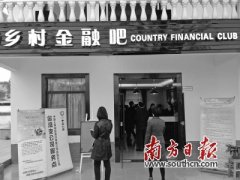
Coffee market is full of "one cup of coffee"
The village financial bar is the first rural financial service station in the country to enter the administrative village. Wang Jie can't blow away the love of the villagers in Sanban village. On December 24, a cafe-style village financial bar was launched, providing 10 key financial services such as financing, deposit and credit information, and guarantee for Sanban village and its villagers. Xiao Kui Village is also playing tall.
History of Coffee planting in the early stage of Coffee introduction and expansion in China (2)
1. The presentation of the respective expressions and questions of Zhu Kula Coffee 1.1 I remember that it was still the spring of 1995, when Professor Mao Genhai of the former South China Hot farming Academy and I visited Xishuangbanna, Yunnan Province. I had the honor to see the review and prospect of Yunnan coffee development published in the third issue of Tropical crop Science and Technology in 1994 by Huang Junxiong and Zhang Xingcan, Institute of Tropical and Subtropical Economic crops, Yunnan Academy of Agricultural Sciences
Comprehensively improve the brand image of "China Coffee"
With the rise of Chinese economy and the integration of Chinese and Western cultures, the domestic coffee consumer population and consumer market are growing at a high speed.

China's coffee consumption has grown at an annual rate of 20%-much higher than the global growth rate of 2%.
In 2008, Huang Wenguang chose to enter Nankeng Reclamation Coffee Manor in Zhangzhou, Fujian Province, and began to grow local coffee. In his view, coffee is squeezing into the Chinese market, which is dominated by tea culture, and if coffee is to be truly successful in China, there must be a coffee bean that is more suitable for the Chinese population, and a local coffee brand with more Chinese characteristics is needed, on the one hand, the market demand for

Bazhong International Development Chamber of Commerce was invited to attend the Coffee Coffee Cafe and Food appreciation Conference in Sao Paulo State.
For the exchange of professional baristas, please follow President Hu Zhongwei, Secretary General Excellence and Minister ALBERTO of Coffee Workshop (official account cafe_style of Wechat). President Hu Zhongwei, Secretary General Excellence and Minister ALBERTO, Secretary of State of ARNALDO, President Hu Zhongwei, Secretary General of Excellence and Minister ALBERTO have a cordial conversation with President Hu Zhongwei, Secretary General excellent and Minister ALBERTO.
More than half of the coffee shops in China do not make money from coffee.
A few days ago, a "profiteering door" news that the price of Starbucks coffee in the Chinese market is fully higher than that in the United States, causing widespread debate in the society. There are doubts that Starbucks' differential pricing is contrary to the principle of fairness, but there is also a view that calculating only the cost of raw materials while ignoring other operating costs obviously lacks economic common sense, coffee belongs to a non-monopoly industry, and its pricing power should be vested in the market and